Activated carbon for selective adsorption and removal of ruthenium (Ru)
Activated carbon for selective adsorption and removal of ruthenium (Ru)
Osaka Gas Chemicals has long manufactured and sold various activated carbons for the purpose of decoloring and removing impurities in the refining process of synthetic materials in the fields of pharmaceutical materials, chemical intermediates, and electronic materials.
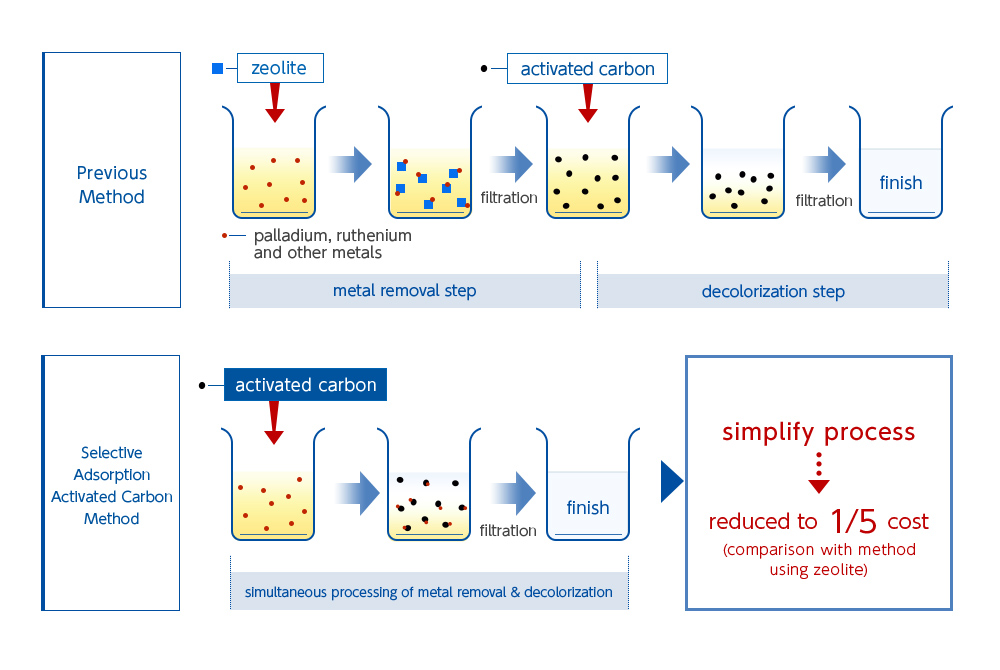
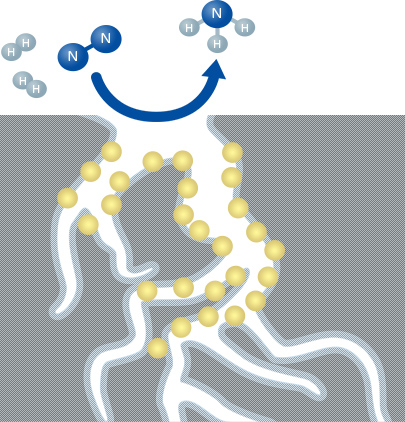
Activated carbon can not only decolorize and remove impurities, but at the same time it can remove ruthenium (Ru) by selective adsorption. Using Osaka Gas Chemicals high quality activated carbons for this application enables cost saving versus the conventional methods of combined use of activated carbon and zeolite or methods using ion exchange resins.
Effective use of Selective AdsorptionActivated Carbon in the fields of electronic material, pharmaceutical intermediatesand chemical intermediates
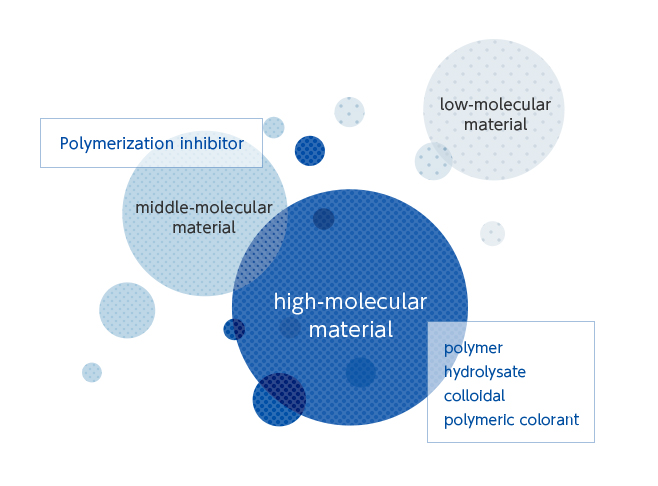
The expected characteristics of Adsorption
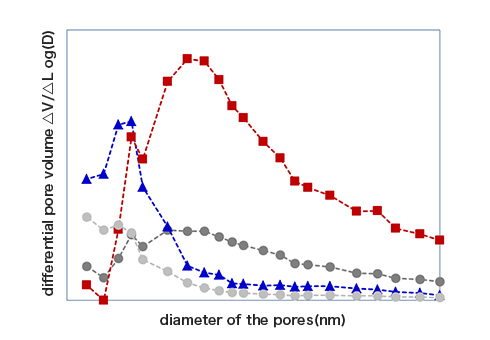
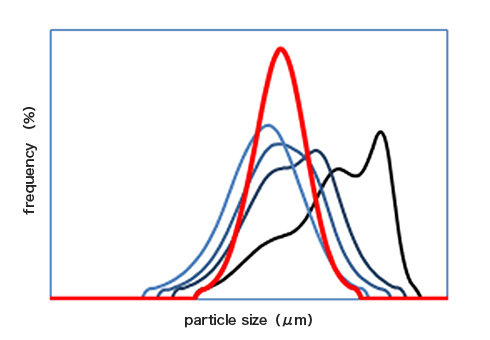
Adjustments of pore size and particle size depending on
purposes and applications
<An example of the adjustment of the pore size>
<An example of the adjustment of the particle size>
We can provide highly functional activated carbon with special functions by adjusting the pore size, volume, particle size, etc. according to various requests (eg, removing homogeneous catalysts containing palladium, nickel, etc. from the solution).
Activated carbon for selective adsorption and removal of ruthenium (Ru)
The biggest benefit of using activated carbon as a precious metal supported catalyst carrier is that it can easily separate and collect precious metals that it carries. Catalytic supports such as zeolite, alumina, and silica have the problem that it is difficult to separate and collect valuable (= adsorbed) expensive precious metals. Osaka Gas Chemicals' activated carbon for catalyst supports has a very small amount of ash at burning. Ash hinders collection of precious metals..
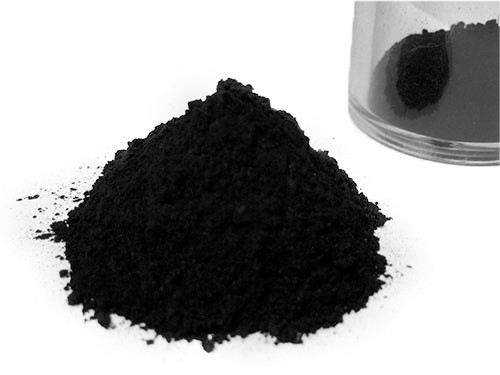
Powder coal
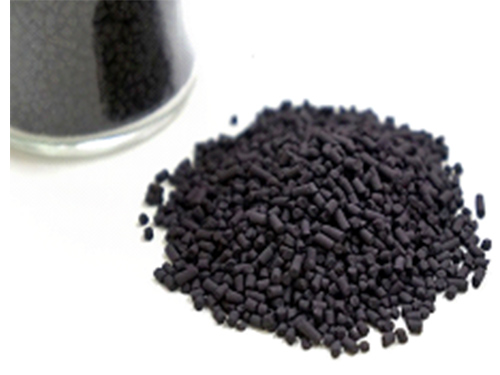
Pellet charcoal
Activated carbon for precious metal supported catalyst supports is required to be highly pure. If the amount of impurities inhibiting the catalytic reaction is low, it can be a catalyst with high reactivity. Furthermore, we will adjust the shape, particle size, microstructure (pore distribution) of activated carbon according to the usage conditions of each user and provide various grade products.
Chromatography
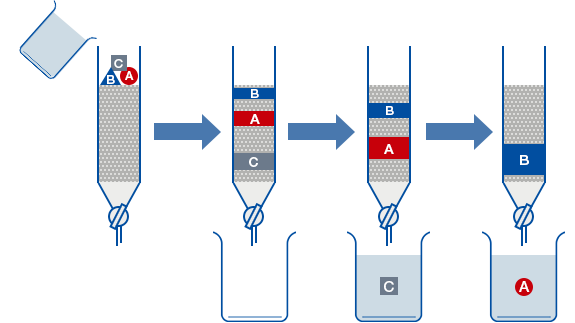
Chromatography is a well-known technique for separation of mixtures. While activated carbon can adsorb a variety of components, affinity and velocity varies with the nature of components. Activated carbon can therefore be used as a support for chromatography : due to its hydrophobic (non-polar) surface, polar compounds can be separated depending on their molecular size or solubility.
Multicolumn adsorption setups can be used in continuous production process.
Like in a standard chromatography, adsorbents can be separated according to their affinity with activated carbon
One of previous methods for metal removal
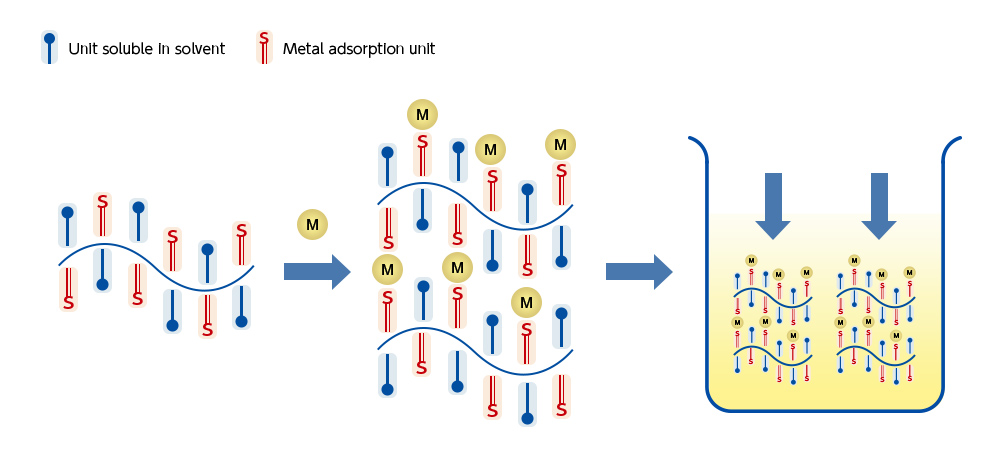
"Scavenger", a conventional metal removal method, is a resin type metal adsorbent and is known to selectively remove metals in a target liquid by using a structure with high metal coordination. And it is used in the pharmaceutical industry etc. to reduce catalytic metals etc. used for reaction to below. However, in the scavenger, the selection performance changes depending on the type of metal and its state. It is pointed out that choosing adsorbents properly and high cost is a problem.
Cross coupling reaction
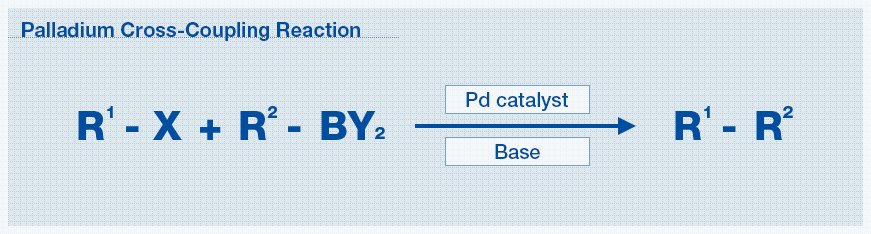
A cross-coupling reaction is a chemical reaction that binds substances with large molecules to each other. Highly functional chemical substances are synthesized by combining parts with various functional groups. It is also used in the synthesis of pharmaceuticals, pesticides, natural products, and chemical synthesis (total synthesis). Many reactions have been proposed, such as the Negishi coupling reaction announced by Dr. Eiichi Negishi, who won the Nobel Prize in Chemistry in 2010, and the Suzuki-Miyaura coupling reaction. The reaction proceeds mainly using a palladium compound as a catalyst.
Contact us - Inquiry form
Please fill out the form in English. Fields marked ※ must
be filled out.